Newsletter #9 - Smashing Fantasy Tropes

Hi friends, Fantasy/Sci-Fi/Horror author Paul James Keyes back with another newsletter!

I’ve done a lot of rather sciency newsletters to date—last time I talked about nuclear fusion becoming a reality [LINK TO NEWSLETTER 8 - We Have Ignition]—so today I thought I’d mix it up with a writerly newsletter. Today I want to talk about Fantasy tropes, and how I smash them.

Tropes are reoccurring themes that exist in stories. Writers use tropes to quickly convey ideas to readers, which is great in a pinch, but can also lead to unoriginal content if a writer doesn’t expand or break open those tropes appropriately.

Of course, everything in writing is subjective, but people know whether or not they’ve enjoyed what they’ve read. Sometimes all a reader wants is the sense of the familiar—this is where tropes shine—but to me, when I read, I prefer to be entertained and led to think about new interesting concepts, not just the same old formulas rehashed a thousand times over.

My philosophy as a writer is simple: People need a sense of the familiar to hang on to in order to feel comfortable within a story. Great stories, however, smash your comfort, sweeping your legs out from under you, and leave your beloved characters headless in a ditch—I’m looking at you, George R.R. Martin.

In order to smash a reader’s expectations I first need to build-up those expectations. Enter: Tropes.

Popular fantasy tropes, what they do, and how I twist them into compelling original experiences for my readers:

(I got this list of popular tropes from https://www.writerswrite.co.za/101-fantasy-tropes-for-writers, but the commentary beneath each item is my own)

1. The Dark Lord. An ancient evil from the elder days is once again threatening the world.

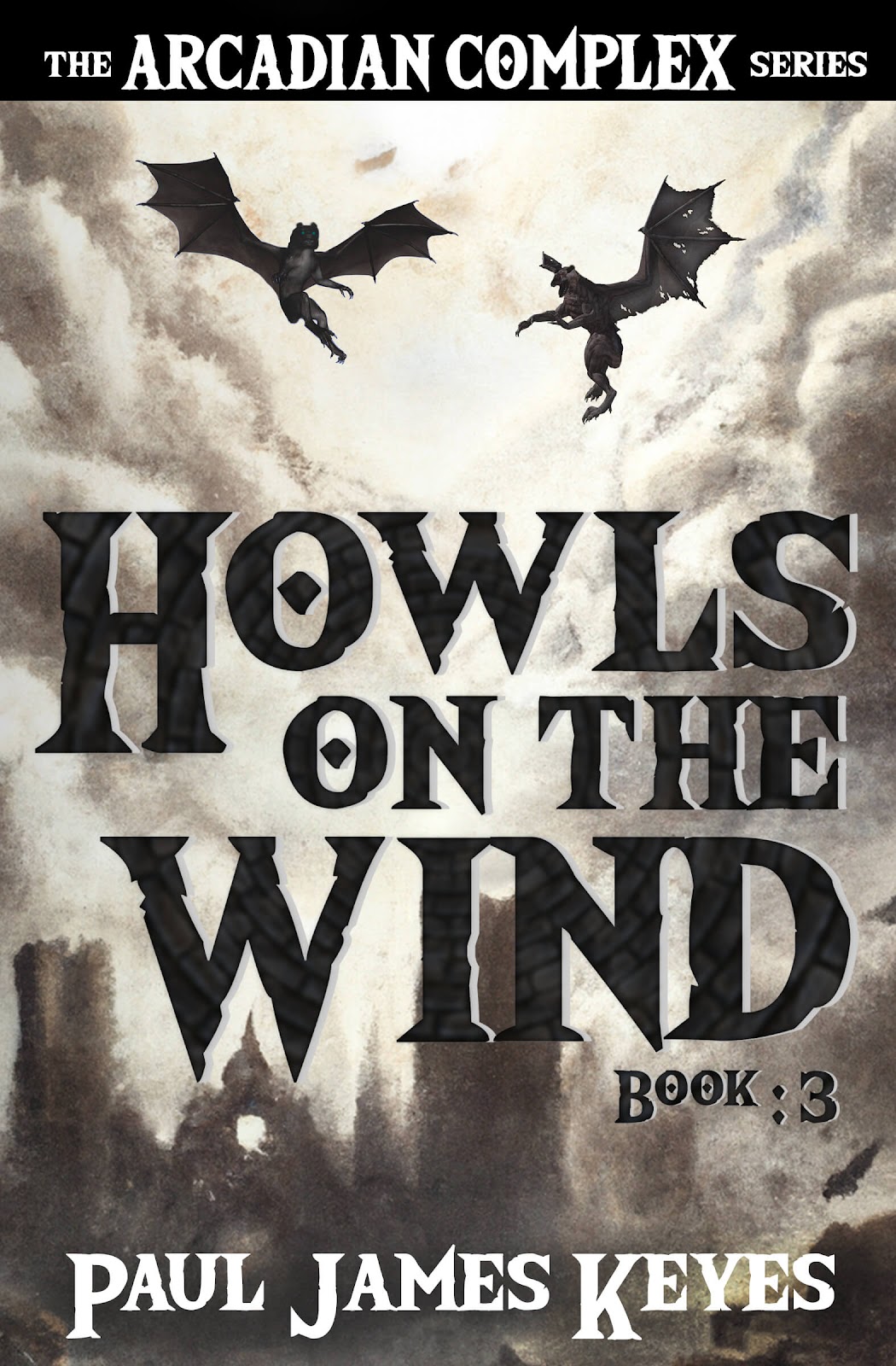
This trope is often used as a great call to action for a would-be hero. I have an “evil king” in my Dark Fantasy series, The Arcadian Complex https://www.amazon.com/dp/B089SR9SFW (Read FREE with Kindle Unlimited), but unlike so many other stories, by the time my protagonists confront the ‘big bad’ for his actions, the reader has already learned of a rich backstory that complicates who the true ‘bad guy’ of the series is. Other great stories have complicated the Dark Lord trope before, Star Wars, for example, twisted original audiences expectations when Darth Vader informed Luke of his lineage and cut off his hand. If evil is simply evil and good is simply good, then characters are simply boring.

2. The Chosen One (protagonist) whose job it is to defeat the Dark Lord (antagonist) and restore the natural order of the world. Often a sword is involved.

It’s a very basic story, isn’t it? I’ve read a number of these. One enjoyable one that comes to mind is The Wheel of Time series. I was inspired as a young teen by that series to become a writer. The funny thing about The Chosen One trope is that the one who has chosen the hero is ultimately the writer, and there usually isn’t any more to it than that. Some ancient prophecy maybe, but not a whole lot of answers. A character simply being chosen by fate rather than making their own decisions undercuts their characterization. They aren’t on their path for any reason other than happenstance. I bill my own story as having a man with a prophetic “mark of kings” on his arm. He is prophesied to become king, but if you know my mantra, maybe he really isn’t, and it’s just a branding that affects the way the people around him treat him. I don’t mind characters being chosen by fate when they still have agency and have to grapple with the results of their actions. The point here is that using a trope like The Chosen One doesn’t have to lead to a lack of nuance.

3. The Chosen One or Hero has been orphaned. It doesn’t matter how they were orphaned, only that family members are a liability to your protagonist and a headache to fit into the plot. (See any Disney cartoon for more information.)

And I’ll lump this one in with:

4. The Hero needs a mysterious parental figure. But, never an actual parent. They are there to guide them on their journey and offer advice.

Sometimes tropes can be really convenient. No one—writers, readers, or teenagers up to no good—want to be bogged down with unwanted parental units. Sometimes a complication is simply unappealing to a writer. I’ve written orphans and non-orphans alike, but there’s just something about an orphan’s pain that makes them a sympathetic character. In The Arcadian Complex, the mysterious parental figure is the grandfather. Rather than never talking about the parents, the grandfather is a storyteller himself, and the absence of the parents becomes as important to the story as Harry Potter’s parents were to that world. By having the absent parents still present in the characters’ minds, this trope is officially smashed.

The list of tropes I linked above continues on for another fifty or so points, and is rather amusing, but I’ve already gone on too long for this newsletter. I have no affiliation with that site, so don’t bother clicking the link on my accord—I simply added it as a source for those interested.

If you want to see how I subvert expectations and tell a fantasy story like no other, my links are below!

Until next time, stay safe out there!

Freebie: Into the Beyond - Part 1: Fated - A Fantasy Horror Series
https://www.royalroad.com/fiction/57968/into-the-beyond-part-1-fated

Share:

Newsletter #8 - We Have Ingition

Hi friends, Fantasy/Sci-Fi/Horror author Paul James Keyes here with another newsletter.

I call you friends, because last time I trauma dumped on all of you about the nature of life and death. [LINK TO NEWSLETTER 7 - 'WHAT ARE WE?'] I apologize if that was uncomfortable, but I can’t not write about these big moments when they happen. I wouldn’t be being genuine otherwise. Today, I really want to stay cheery, so I’ve picked a topic that truly is one of the greatest and also most recent feats of mankind: Fusion.

 
That’s right, nuclear fusion. We’ve done it for the first time ever. US scientists at the National Ignition Facility at the Lawrence Livermore National Laboratory in California successfully produced a nuclear fusion reaction that resulted in a net gain in energy after accounting for all the energy used on the lasers that power the reactor. This happened back in December.

We are officially living in a post-fusion world. It will go down in history books as the beginning of a new era in infinite clean energy once the technology can be tested and scaled up (which will take years from now, but still!). It’s genuinely one of the biggest achievements of all time, and I can hardly believe we are all getting to live through this era of such technological advancement. It’s astonishing. If someone told me a decade ago that successful net energy creating fusion would be a reality today, I would probably have said they were delusional—maybe in a hundred years!

The reactor uses an array of 200 lasers to contain a series of explosions started out of a pellet of hydrogen fuel. At a rate of 50 explosions per second, the energy is bounced back in on itself until it grows hot enough to fuse the atoms back together, creating clean, heat energy as a byproduct of the fusion.

Things aren’t going to change overnight. The reactor is only powerful enough to boil about 10 kettles of water currently. This will need to be scaled up substantially to run a power station, but the groundwork has been laid. A world filled with cheap and clean energy, here we come!

Until next time, stay safe out there!

Freebie: Into the Beyond - Part 1: Fated - A Fantasy Horror Series
https://www.royalroad.com/fiction/57968/into-the-beyond-part-1-fated

Share:

Newsletter #7 - 'What Are We?'

Hi again! Fantasy/Sci-Fi/Horror author Paul James Keyes, back with another newsletter!

Last time I depressed everybody with a grim look at what AI could mean for our future. [LINK TO NEWSLETTER 6 - AI COMETH] Today, I thought I would be fun to do something a little more cerebral by playing a little game I just made up called ‘define its nature’ where I use logic and scientific knowledge to define the nature of a term you only thought you understood. Let’s start with a big one. The question that I will be analyzing is ‘What are we?’

 
Other ways of asking this could be ‘What are humans?’ ‘What is life?’ or ‘What is mankind?’. There are nuances here depending on how this question is asked. The questions will get refined along with the definition as we go. This one is different than ‘what is the meaning of life?’ which I believe to be a mostly subjective question. What I propose to answer is ‘What exactly are we?’.

Stick with me here. Now obviously we are beings of matter, which is just compressed energy. Everything is energy. That is about as deep as most people get when thinking about the nature of life. The mistake here is one of definition. Defining what matter is is NOT the same as defining what we are. Don’t get me wrong, realizing matter is energy was a great revelation when Einstein made his famous equation E (energy) = MC^2 (mass multiplied by the speed of light squared). Yes, I know this is boring to non-physics nerds, but it really was a revolutionary discovery—equating energy and mass.

When trying to define what we are there are several logical approaches. You can take the broad approach of defining us as a group i.e. ‘humanity’, or the narrow approach of defining who we are as individual meat structures. I think both are important to any further discussion of the nature of man and mankind.

I would argue that a human is more than just a structure of cells with a stupid look on its face. A human is made up of cells of course, which is matter, which is energy, but we also have literal energy shooting around inside of us. Our neurons pass charges around the brain. We can see an image of this when people receive brain scans. The brain has trillions of connections, making it the most complicated natural system known to mankind (fun fact: the human immune system is the 2nd most complicated system known to mankind. Pretty crazy that out of everything we know about in the whole universe, the two most complex systems are both inside of us—and I don’t even know what #3 is yet, probably another animal’s brain?).

Okay, so we are a physical meat structure made up of matter, combined with a constantly transforming energy structure some might even call science’s equivalent of a soul. If one day we could accurately replicate the electrical structure, it could be like Altered Carbon where your mind is copied into a digital state in which we transcend death—but that’s a whole other discussion for another time.

I don’t think we’ve gone deep enough. There is something more to people. People do not exist separately from the history of humanity. It is what led to our births. Humanity (and more broadly, life in general), like erosion or evaporation, is a natural system. Our cells duplicate; life passes along copies of itself to future generations; new DNA sequences combine at random, the efficient usually survive—the right answer is the one that survives to make more copies. It’s a single step of evolution on an individual scale. Our brains are a byproduct of this evolution of life, so accurately, one could say we are the physical manifestation of the algorithm that all life follows in order to exist—a forever (hopefully) chain of tumbling dominoes of duplication, one cell to the next, one generation to the next.

But we are more than that still! We are other algorithms as well. Our brains make decisions based off of stimuli it takes in from our senses. All of our decisions and the inner workings of our brains are governed by reinforcement learning. It’s physics and math and follows an algorithm. Truly, we learn in a manner that is very similar to how modern AI learns. You experience something, build connotations about the outcomes and make future decisions based off of what you perceive to be the best move.  This may seem metaphysical, but it could be argued that we are the weights behind our learning algorithm. That’s not just our personality, but the culmination of all the experiences that mold us.

It sort of comes down to semantics, but I will define who you are at the beginning of your life as different than who you end up as by the end of it.  Every cross section of you across time is made up of different cells, different energy, as well as the ever evolving algorithm of your mind and decision making.  Really, you are all of it, just at different times.

So now, to put it all together: We are meat structures with storms of energy inside of us who transcend time as a natural system that is constantly changing and evolving. And we’re all just trying to survive.

That being said… A friend from high school killed himself recently. I know I buried the lead on this one. I guess I’ve just been grappling with a few things. It’s times like this that I tend to look inward. Lofty questions like ‘what are we?’ are a comfort to me as I dig deeper into the interconnectedness of the universe. I’ve always had a scientific mind, and as a non-religious person trying to understand my place in the universe, it has to be enough that we exist in the here and now. That’s all we have.

I mean, really. Everything that lives will one day die, and it is only the beauty of our existence that we leave behind that gives any of it any meaning beyond the momentary fancies of our senses. He left behind his wife and three young children. I can’t even imagine what he was grappling with. If you or anyone you know is having suicidal thoughts, I beg you, please seek help and have someone get rid of any quick ways out. The emergency number in the US is 988, and the non-emergency number, which goes to the National Suicide Prevention Lifeline is 800-273-TALK (8255).

Damn, I hadn’t planned on writing any of that originally, but I needed to get it out. I don’t want to be the depressing newsletter guy, but sometimes life throws you terrible curveballs and all we can do is go on living the best way we know how.

Thank you for being here with me, and as always, stay safe.

Freebie: Into the Beyond - Part 1: Fated - A Fantasy Horror Series
https://www.royalroad.com/fiction/57968/into-the-beyond-part-1-fated

Share:

Recent Posts